
For us two-legged creatures, driving has long been a completely natural part of our everyday lives. Get in. Drive off. Arrive. But for our four-legged friends, car journeys can be a real challenge. Especially if they are not yet used to this mode of transport. It is therefore up to us dog owners to make the journey as pleasant and safe as possible for our darling, even if we transport the dog in the boot – not only our four-legged friends ultimately benefit from this, but also we dog owners, because: relaxed dog = relaxed human, right?
Transporting a dog in the car – these are the things you should know
From a sober perspective, in German-speaking countries, your dog is not considered a living creature during car journeys, but rather "cargo" (Paragraph 23 StVo). While this may be upsetting to some dog owners, it is the law and we should adhere to it if we want to avoid a hefty fine. Because that is exactly what awaits any dog owner who does not adequately secure their cargo or dog during the journey. Apart from the impending penalty, securing your darling during the journey makes perfect sense. After all, you could cause an accident if you are distracted by your four-legged friend, and you could also injure your darling if you have to brake hard unexpectedly.
Your dog is considered "cargo" when you transport it in the car
Even if the term "cargo" does not do justice to your sweet furry friend, you should always secure your four-legged friend well during car journeys to optimally protect both of you and all other occupants. By law, you are allowed to transport your dog in the car if it is on the back seat, in the footwell behind the front seats, or in the boot - the latter should, of course, be open towards the front, as is common with station wagons and SUVs, secured by, for example, a partition grille.
How to transport your dog comfortably & safely in the boot or on the back seat
As you know, there are various options for transporting your darling. Let's take a closer look at them together:
1) Transport in the boot
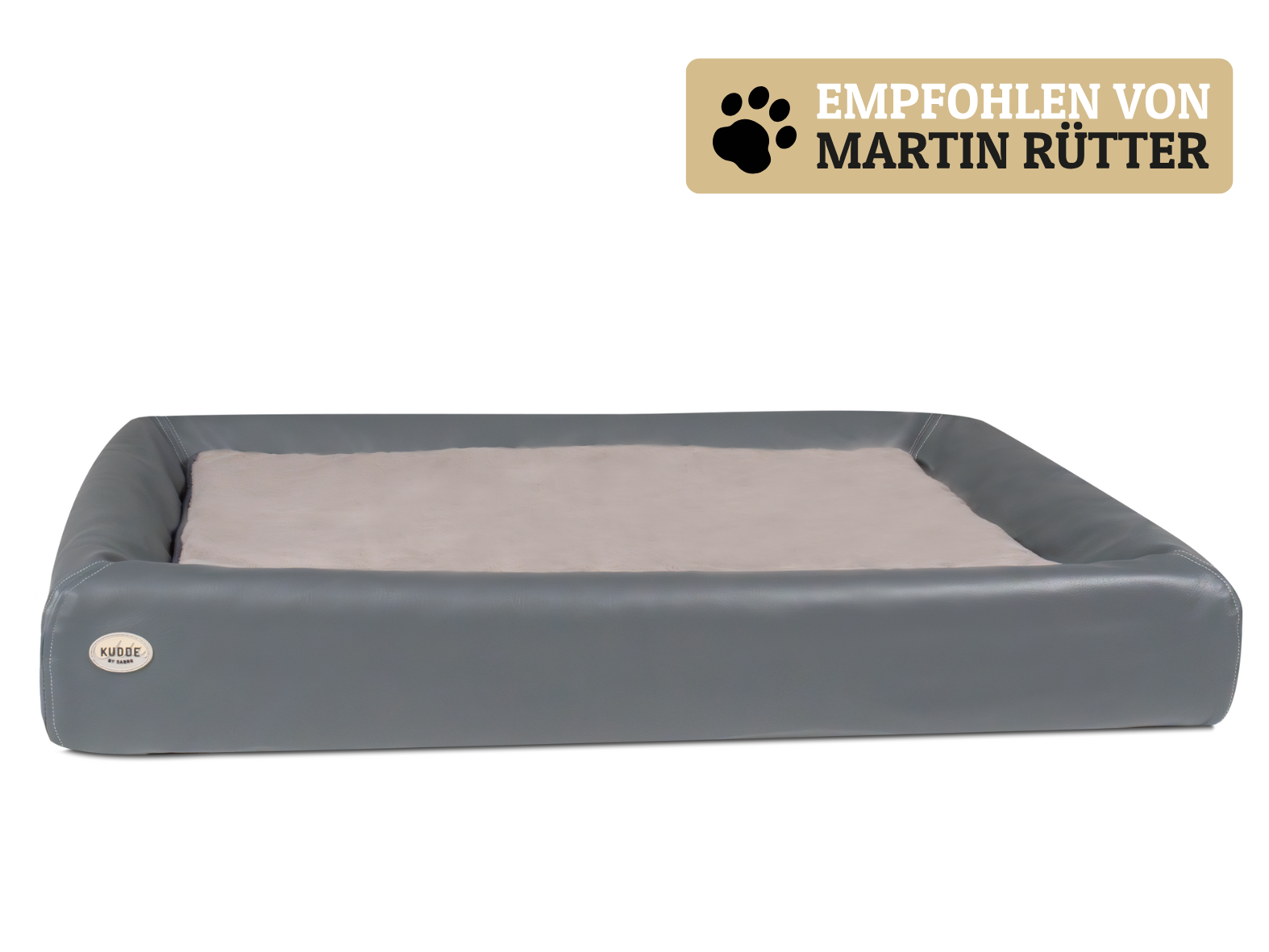
Especially large dogs are easiest to transport in the boot. There is simply enough space here for the furry four-legged friends. However, it is advisable not to simply place your darling in the "bare" boot. After all, they will not have enough support here during the journey and may slide back and forth. High-quality orthopaedic dog mats and dog beds provide a remedy: your dog will not only lie comfortably here, but also securely and safely. And incidentally, your car will be protected from dog hair, moisture and dirt. Ideally, you should combine your dog's new boot sleeping place with a practical bumper protector. This way, the entire rear of your car is optimally protected if you want to transport your dog in the boot.
As an alternative to a dog bed, some dog owners also like to use a dog transport box in the boot. However, please make sure that it is large enough so that your dog can stretch out and move around during the journey. To equip the box with optimum comfort, you can put a well-padded insert inside for your four-legged friend. From your darling's point of view, an orthopaedic mat, such as our dog sleeping mat JOKKMOKK Outdoor, is particularly suitable here, as it optimally supports joints and spine.
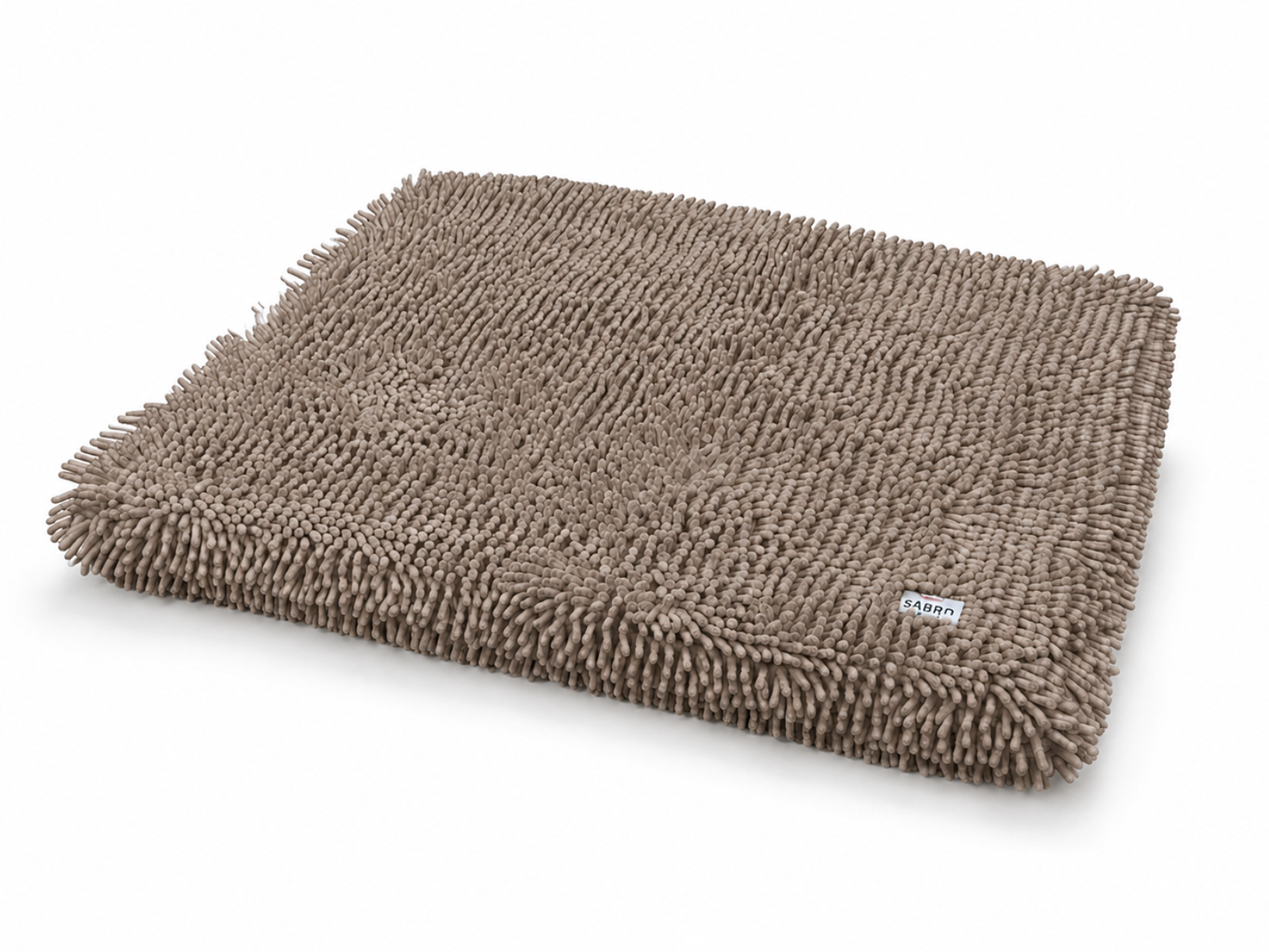
A cosy dog mat or non-slip dog rugs also ensure that your dog cannot slip in the box during the journey, thus offering them more safety and comfort during the car ride. The dog mat POLARPAD can also be cut to size in no time at all, so that it fits exactly into the transport box.
2) Safe transport on the back seat or front seat
If you like to keep an eye on your pet while driving, transporting them on the back seat or passenger seat is a good option. For maximum comfort and safety, a car seat for dogs is recommended. Thanks to the high edge, soft padding and comfortable cover, your dog will feel particularly secure there. Our RIDA dog car seat offers your pet enough space to stretch out comfortably during the car journey. The stable harness system, with which the car seat is fixed to the seat belt of the back seat, ensures maximum safety. This prevents the car seat from sliding during the car journey. The second harness system, consisting of two seat belts, ensures that your dog stays in the car seat. Even in the event of emergency braking, they are not exposed to any danger.

Please note that you should never attach the harness system to the collar. The seat belt is only intended for attachment to the harness. If your pet has to stay in the car alone for a short time, you should unbuckle them as a precaution. But please remember that in sunshine and during the warm season, a lot of heat can quickly build up in the vehicle, which becomes a life-threatening danger for your four-legged friend.
To ensure your dog is safe and comfortable everywhere in the vehicle, it's worth taking a look at our collection "Car Accessories for Dogs". There you will find everything – from car seats to dog mats and bumper protection – for stress-free car journeys.
SABRO Tips: How to get your dog used to car travel
Not every dog is enthusiastic about car travel from the start. Especially for rescue dogs and their freshly minted dog owners, car journeys can quickly become a sweaty adventure. Many rescue dogs suffer from motion sickness. They associate this with the car, and it quickly becomes a real challenge to transport the dog in the car.
Therefore, it is important to get puppies used to the car from the beginning. With a little patience, time and training, older dogs also learn that driving a car is not a danger, but one of the things that people like to do with their pets. Is your furry friend also one of the car-refusers? Then the following tips are just right for you.
With these tricks, your dog will soon enjoy being in the car
From a four-legged friend's perspective, moving around in a car is anything but natural. For some furry noses, this rolling vehicle even represents a potential danger. It is all the more important that we dog owners take enough time to get our darlings used to the vehicle before we even think about a shared journey.
Tasty treats can certainly do us a good service here. Treats help your four-legged friend get used to the vehicle. If you don't pressure your furry friend, but first give him enough time to explore the rolling monster in his own way and encourage him with delicious snacks, you can, after a certain time, expand the radius and let him explore the car from the inside.
Wait a while with the first journey until your dog no longer considers the car a possible danger. To effectively get your four-legged friend used to car travel, you should only undertake short journeys at the beginning and ideally combine them with great excursions. This way, your darling learns that car travel is a great thing.
What are your experiences with your dog in the car? Feel free to leave us a comment and tell us your tips on how to make car journeys with dogs relaxed.