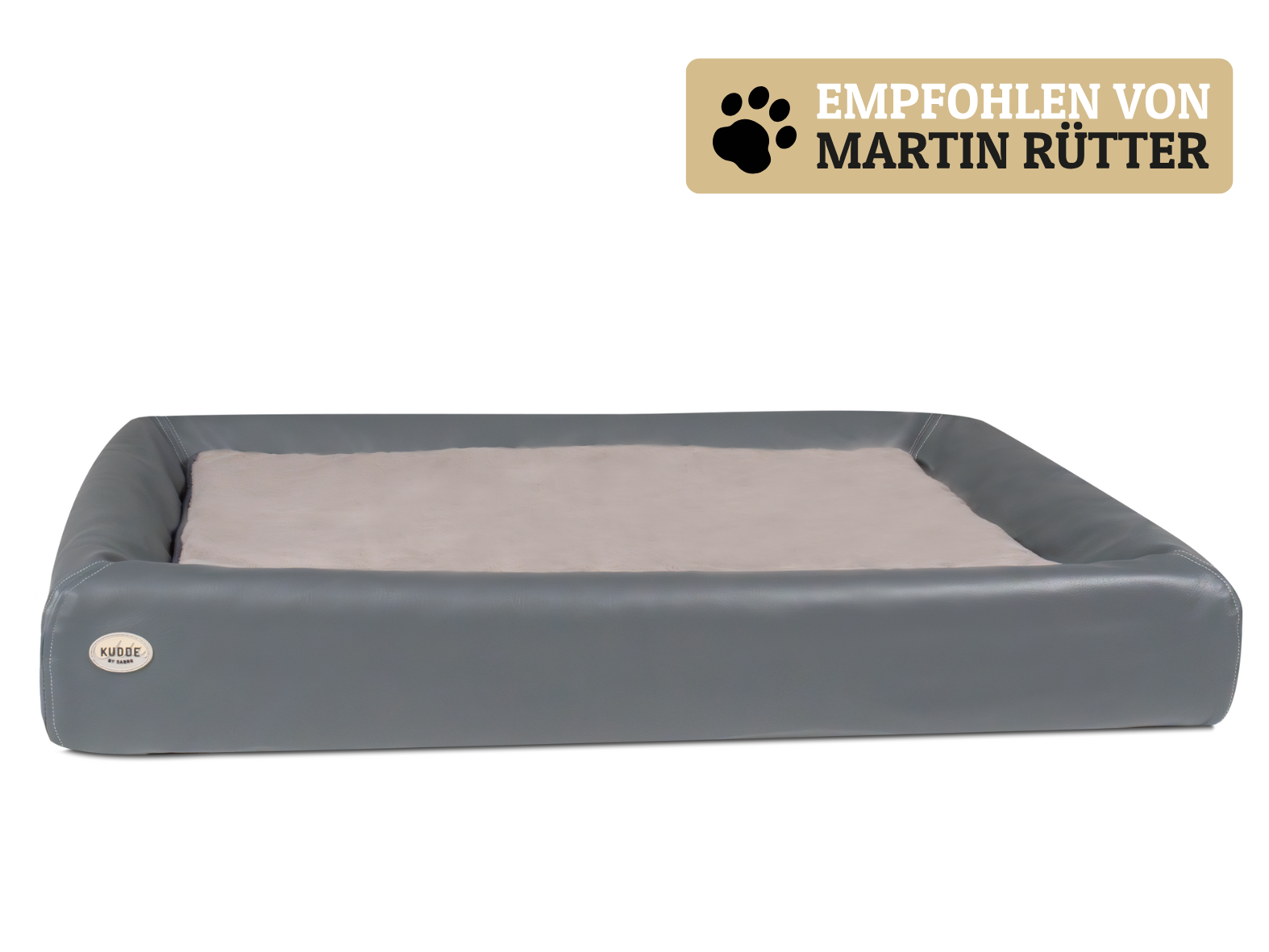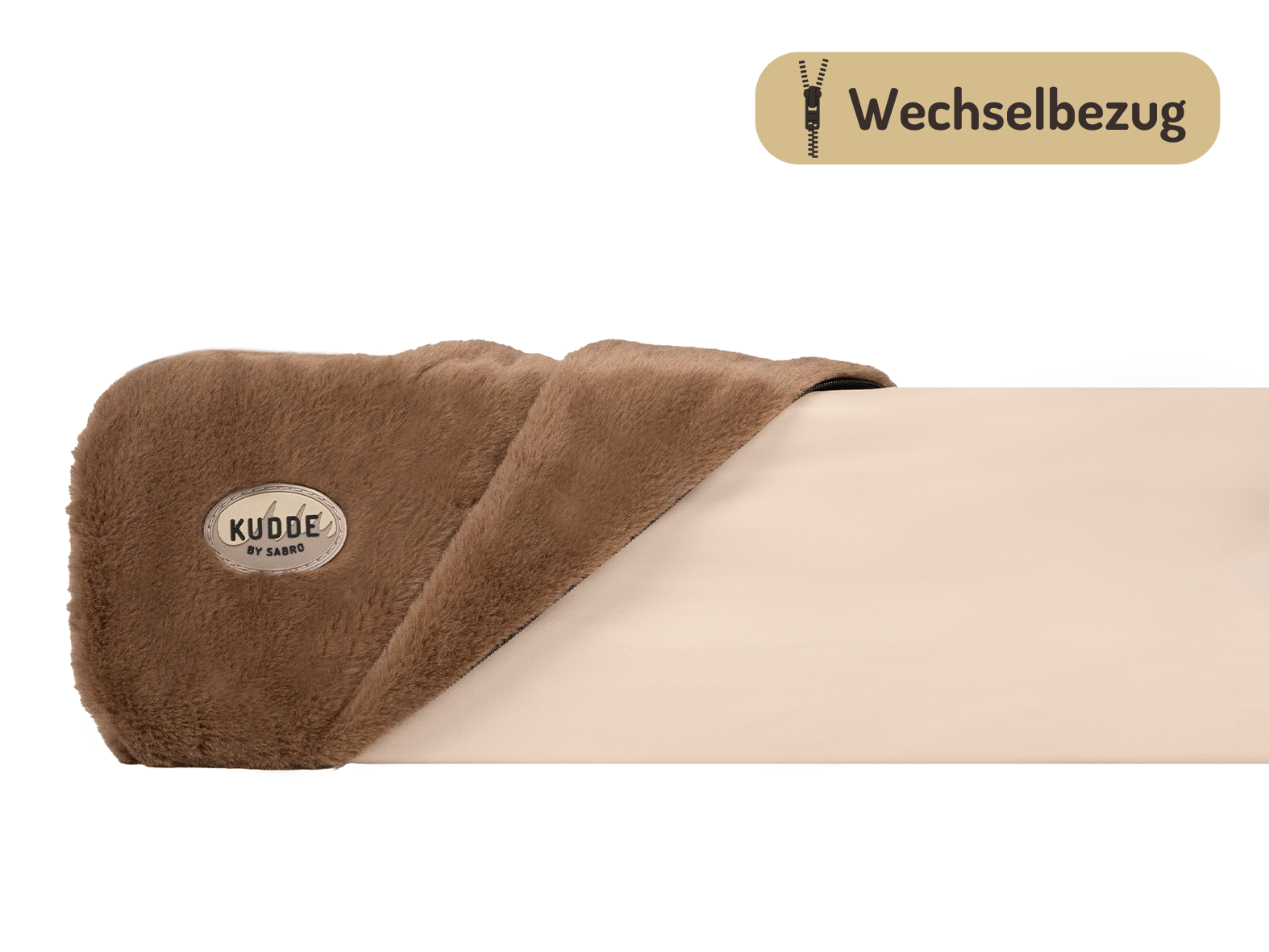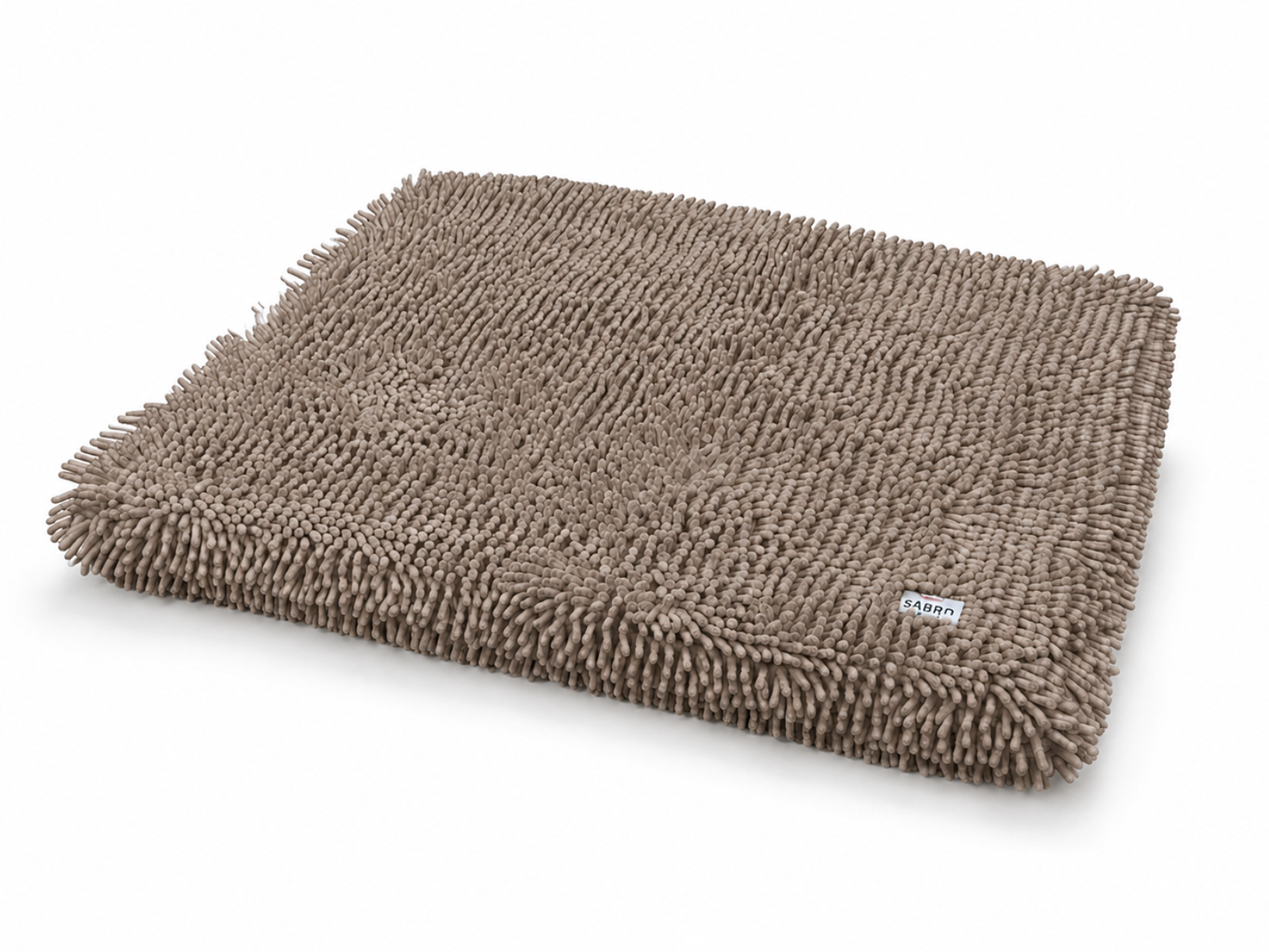

The KUDDE dog bed promises back-friendly sleep. To verify this promise, it underwent a pressure load test. Our tester: a sleep-savvy Cocker Spaniel Mix named Cooper with over a year of experience lying and sleeping in every conceivable position. His thin coat and little fat over his bones make a soft sleeping surface indispensable for Cooper! Big advantage: pressure peaks become visible very quickly during measurements with him. So let's start our own "Cooper Test."
We test: how joint-friendly is the KUDDE dog bed really?
The pressure load on different body regions when lying down can be measured using a sensor mat. Conclusions can then be drawn about the pressure-relieving effect of various materials. These measurements are carried out, for example, in the development of medical products.
When testing our KUDDE dog bed, the goal was to compare the contact pressure on the dog's bones and joints when lying on a wooden floor or, alternatively, in the KUDDE Standard and KUDDE Special.
Fun Fact: The start of the test was delayed because the subject interrupted the lying test outside the measuring mat with a three-hour nap.
When evaluating the measured values, the smaller the peak pressure, the better the pressure-relieving effect. The measured values are expressed in mmHg (millimeters of mercury). The pressure distribution over the loaded area is also measured in in² (square inches). If pressure can be distributed over a larger area, the resulting pressure is reduced. Here, the higher the measured value, the greater the pressure relief.
Cooper's test then began on a wooden floor. The measurement was first carried out lying down with his head upright (peak pressure 150 mmHg) and then lying down with his head lowered (peak pressure 100 mmHg). The red areas indicate the peak pressure in each case.


After that, it got cozier for Cooper, because he was allowed to move into the KUDDE. Both KUDDE variants were set up: The classic KUDDE with dimensionally stable standard foam and the KUDDE Special with a 2 cm thick, thermoelastic layer of viscoelastic foam in the lying surface. Measurements were taken in every conceivable position:

The result of the pressure point test confirms back-friendly lying in the KUDDE dog bed
The result confirms our over 30 years of experience: the KUDDE Standard already reduces the peak pressure by almost 50% - and the KUDDE Special with thermoelastic foam even by over 60%! The pressure distribution is also significantly improved.

Does this mean the KUDDE Special is better than the KUDDE Standard?
If you look at pure pressure relief, the KUDDE Special with the visco effect performs best. But here you have to differentiate, because dogs and their requirements are different.
Older dogs or four-legged friends with back and joint problems particularly benefit from an orthopedic dog bed like the KUDDE Special with significant pressure distribution to optimally support the spine and joints. Thanks to its stable lying surface and optimal pressure distribution, the KUDDE Special is therefore also excellently suited as a dog bed for large dogs.
For all other dogs, the conventional KUDDE is already the optimal choice, because even here the advantage over a thin dog mat is clear due to a more than 50% lower peak pressure.
How does your dog lie? In a dog bed, basket or on a mat? Feel free to share your experiences in the comments!