
Before you get unnecessarily worried, let me tell you this first and foremost: your dog licking their paws is generally completely normal. Paw licking is part of a dog's normal behavior, for example, to keep themselves clean. However, licking also serves as an alternative to scratching for your dog, because unlike us bipeds, dogs cannot do this. So if their paws itch, they inevitably have to lick them – the saliva of the four-legged friends then relieves the itching.
However, if you notice that your dog's behavior changes and paw licking occurs more and more frequently, it's worth taking a closer look. Because excessive paw licking in dogs can indicate more serious issues, such as inflammation, wounds, itching due to allergies, yeast or skin fungi, foreign bodies, or even psychological problems.
We have answers to your questions! In this blog post, we'll tell you various reasons that can be responsible for excessive paw licking in dogs. At the same time, we'll give you helpful tips on how you can quickly and easily help your dog with simple home remedies.
However, the general rule is always: In case of uncertainty or emergencies, you should always take your four-legged friend to the vet. This way, both of you, you and your dog, are on the safe side.
These can be the psychological reasons for your dog's paw licking
Excessive paw licking can indeed have psychological reasons, because dogs try to calm themselves down or reduce stress this way. Stress can be caused, for example, by external factors such as noise, people, or other animals. But also fatigue, general discomfort, a move, or if your furry friend is alone for too long, sometimes manifests itself through compulsive paw licking – the action becomes a kind of coping mechanism for your dog to compensate for anxiety and stress.
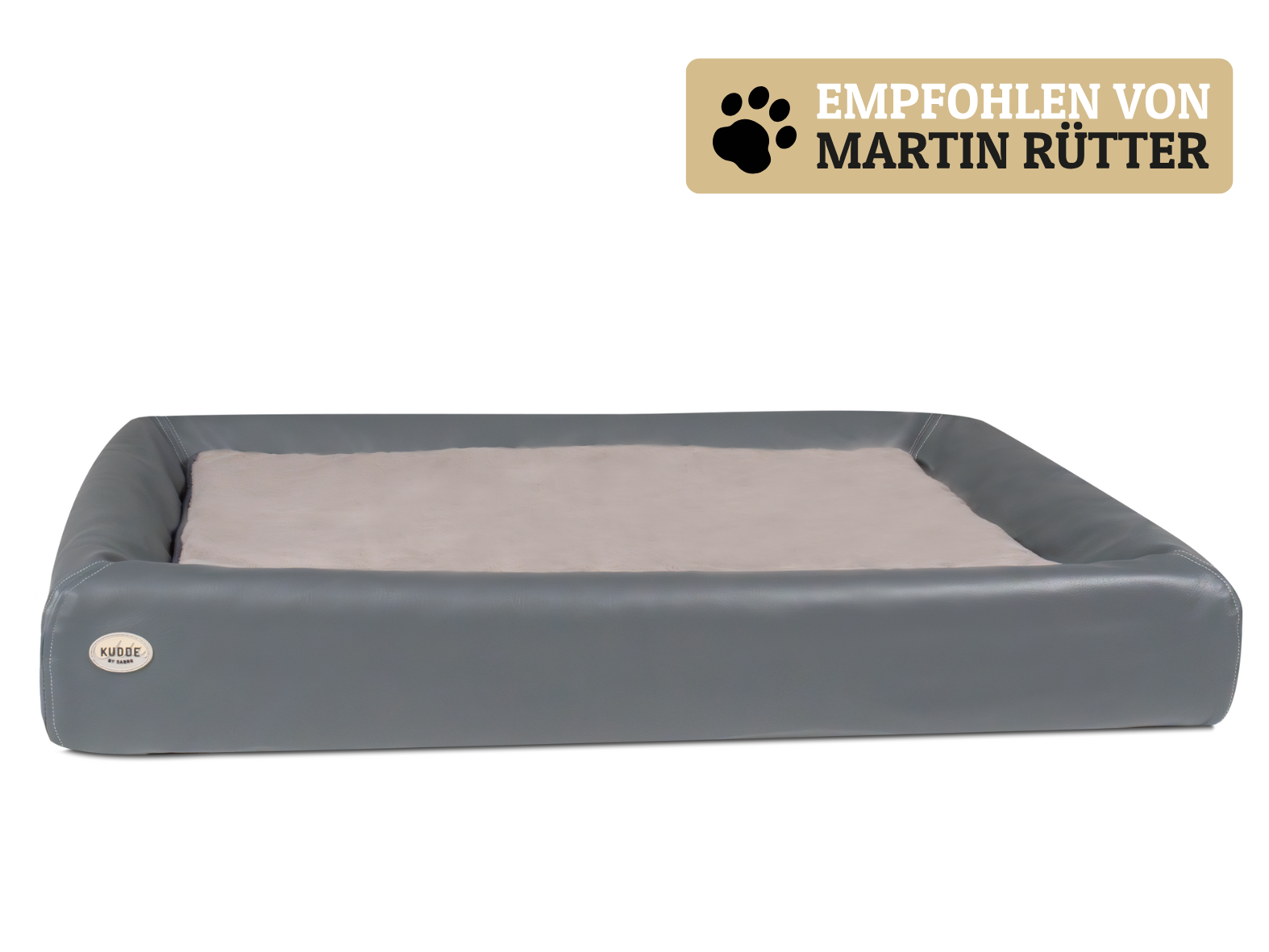
As dog owners, we can specifically do something good for our darlings by creating a safe and comfortable retreat for them. Our orthopedic dog beds are particularly suitable for this: They offer optimal support for joints and spine and at the same time create a feeling of security. This way, your dog can not only relax and sleep better, but also reduce stress. Closeness, security, and a healthy lying feeling help to reduce anxiety – and excessive paw licking can gradually return to normal.
Like us humans, dogs sometimes get bored – from boredom, they then constantly lick their pads and claws. If this is the case, stimulating activity, a nice chew toy, or a long walk can be the perfect balance. Our plush toys for dogs are also ideal for warding off boredom and giving your darling joy and variety.
If, despite good intentions and effort, the paw licking does not stop, your darling's compulsive behavior is probably more likely to have physical reasons.
Physical causes of compulsive paw licking
Itching
As we now know, dogs cannot scratch themselves and must lick instead. Therefore, your four-legged friend's licking can also simply be "just" itching. It is now important to find out what is causing this itching: allergies, a parasitic infestation of fleas or mites, as well as insect bites can, for example, be responsible. But fungi and bacteria, such as yeast or skin fungi, can also cause itching on your dog's paws. It is best to check the paws (pads and claws) regularly – especially after a walk!
Pain from foreign bodies, injuries or inflammation
In addition to itching, pain due to injuries, inflammation, or irritation on the paw can also be the reason why your dog constantly licks its paws. Foreign bodies such as thorns or splinters can quickly injure dog paws and get stuck badly – injuries of this type quickly become inflamed and can even lead to painful abscesses in the skin. Such abscesses usually occur between the claws on the paw, where they initially cause itching and later pain – by constantly licking its paws, your dog thus tries to relieve the pain. In summer, a burn from hot asphalt can also cause pain on the pad.
As you can see, many things can cause pain in the paws, so if in doubt, it is better to contact your veterinarian to determine the exact cause of the paw licking.
With these practical home remedies you can treat your dog's paws
Paw licking can usually be treated easily at home, as long as there are no serious health reasons. Often, simple home remedies are enough to treat the causes. These include, for example, compresses and poultices with sage oil, apple cider vinegar or chamomile tea, because these home remedies soothe itching, whether due to allergic reactions, yeast/skin fungi or mites.
You can gently remove foreign bodies in pads or claws with tweezers and then rinse the wound on the dog's paw with cold, clear water. Afterwards, you should thoroughly clean the injury in the skin with antiseptic oils and disinfectant solutions – in this way you reduce the number of germs on the wound and thus prevent additional inflammation on your dog's paw.
SABRO Tip: How to prevent paw licking
For many dog owners, prevention is better than cure: For this reason, even small changes or precautionary measures in everyday life are suitable to prevent excessive paw licking from occurring in the first place. Especially chew toys and extensive walks can reduce both stress and boredom in your four-legged friend. When walking in winter, you should pay attention to road salt, as this can later cause itching on the paws – and if your dog then licks its paws after the outing before you could wipe them clean, the salt can lead to stomach problems.
Paw protection is useful
To ensure that your dog does not come into contact with harmful influences such as road salt, heat, or sharp objects in the first place, special dog shoes are the ideal protection. In winter, they protect the sensitive pads from aggressive road salt, in summer they prevent burns from heated asphalt. At the same time, dog shoes also protect against foreign bodies such as glass shards or splinters that could cause injuries during walks. Our tip: Care for the paws with a balm before putting on the shoes – this reduces friction and supports skin health. Dog shoes also provide valuable services at home, as they are non-slip and can also serve as bite and lick protection in case of injuries or allergies.
In short: This is why your dog licks its paw and how you can help it
When your dog licks its paws, it is often a sign that something is wrong either psychologically or physically – but don't worry, you don't have to assume the worst right away. Often boredom or stress can be a trigger, which can be easily remedied with closeness and attention.
However, if it is an itch caused by yeast/skin fungi, mites and allergies, or an inflammation due to foreign bodies, simple home remedies such as chamomile tea and disinfectant solutions can help. If, however, your four-legged friend's unusual behavior persists, you should not hesitate to consult a veterinarian.
To prevent paw licking from the outset and thus save yourself a visit to the vet, paw protection shoes can help to protect the skin from hot ground in summer, among other things. In winter, suitable dog shoes also protect against road salt.
What are your experiences: Does your dog constantly lick its paws? Feel free to share your experiences as well as personal tips and tricks on the topic of paw licking in the comments!